What to include in an emergency contact document for your parents
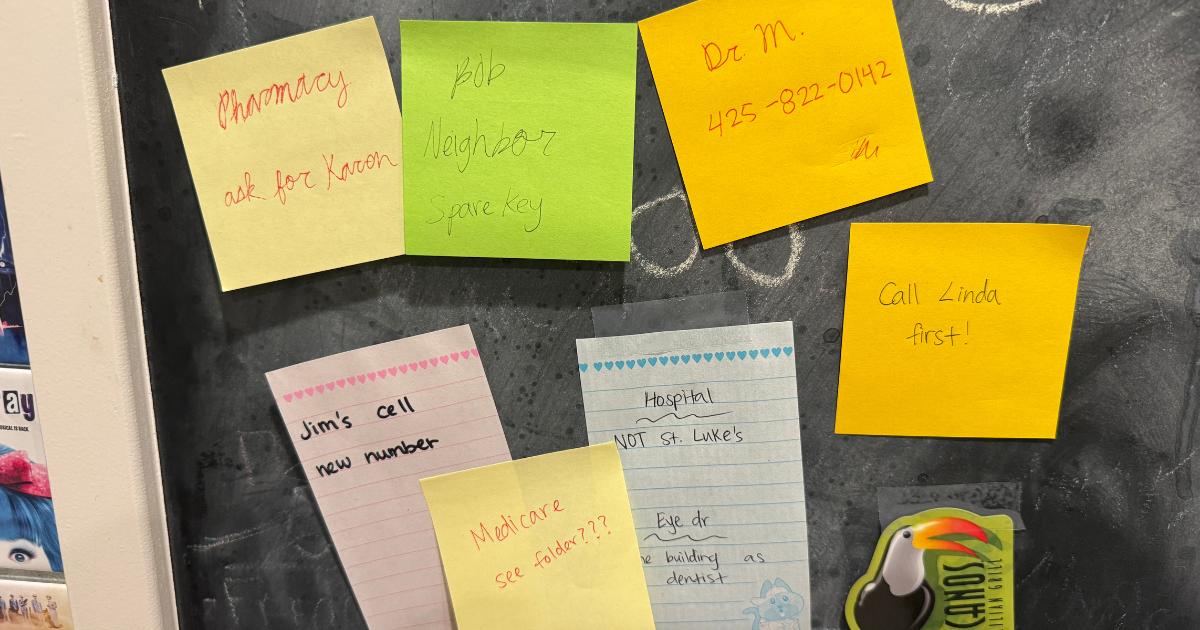
My mom had a system. It was a collection of post-it notes on the inside of a kitchen cabinet, phone numbers written in pencil, none of them with a name next to most of them. My wife’s dad had something similar. Both systems existed. Neither one would have held up in a real emergency.
If someone had shown up and needed to reach a doctor, confirm an insurance provider, or find out who had medical decision-making authority, we would have been standing in that kitchen trying to decode pencil handwriting or rifling through my mom’s purse while everything else was already happening around us.
That’s the version of “prepared” most families are actually working with right now. And if you’re honest, it might be the version you have too.
What is a family emergency contact document?
A family emergency contact document is a single, organized record that gives the people closest to you what they need to act quickly in a crisis. A good emergency contact document for your family goes well beyond a list of phone numbers. It covers medical information, insurance details, healthcare authority, and a prioritized contact directory, organized so that anyone who might need it can actually use it, without having to call you to figure out what it says.
Why a post-it on the fridge isn’t enough
Most people have some version of an emergency contact system. The problem isn’t that the information doesn’t exist, but it’s often scattered, incomplete, and only legible to the person who wrote it.
In an actual emergency, the person who needs that information is usually not the person who created it. It’s a spouse, an adult child, a sibling, or a first responder. They don’t have time to search three rooms and interpret handwriting. They need a number, a name, or a yes or no answer, and they need it in the first five minutes.
A real emergency contact document for your family is designed for that person, not for you.
What to include in Part 1: the first 30 minutes
Part 1 of a good emergency contact document is what a first responder or emergency room doctor needs in the first five minutes. This is not the place for your life story. It is a snapshot, short enough to scan quickly, complete enough to act on.
It should include:
Full legal name, phone number, and home address
Health insurance provider, group number, and Medicare ID if applicable
Current medications and doses
Known allergies and reactions
Known conditions a doctor would need to know about, such as diabetes or a heart condition
Primary care doctor and preferred hospital
Healthcare proxy or power of attorney: who can make medical decisions if this person cannot speak for themselves, and where that document is located
Emergency contacts listed in the order they should be called
Phone PIN or passcode, and location of spare keys
That last item surprises people, but if someone needs to reach a contact through a parent’s phone and it’s locked, a PIN in a known location matters.
What to include in Part 2: the full family contact directory
Part 2 is the complete record, not the emergency snapshot. This is what an executor, a caregiver, or an adult child needs when managing someone’s care over time, not just in the first hour.
It should include:
Primary care doctor: full name, practice, address, patient portal, notes
All specialists, with name, specialty, practice, and notes on the relationship
Dentist and eye doctor
Pharmacy name and location
Family and personal contacts, including relationship and notes on role
The goal of Part 2 is that a substitute, whether that’s a spouse, an adult child, or a sibling stepping in during a difficult period, can navigate that person’s care without having to reconstruct it from scratch.
"If you're also thinking about funeral planning, our funeral cost calculator can help you understand what to expect."
Do this with your parents first. Then do it for yourself.
The most common thing people say after sitting down to fill this out is that they didn’t realize how much was missing. Not because their parents were disorganized, but because no one had ever put it all in one place in a format another person could actually use.
Set aside about 20 minutes with your parent. Go through Part 1 first, since that’s the section with the most immediate value. Then work through Part 2 over time. It doesn’t have to be finished in one sitting.
When you’re done, share it with two or three people who might ever need it – adult kids, siblings, caregivers. If it’s a Google Doc, sharing takes about 30 seconds. If it’s printed, make sure at least one other person knows where it lives, or make a copy.
Then fill one out for yourself. The people who love you deserve the same thing you’re doing for your parents.
Frequently asked questions
What is the difference between an emergency contact and a healthcare proxy?
An emergency contact is someone who gets called when something happens. A healthcare proxy, sometimes called a healthcare power of attorney, is someone with the legal authority to make medical decisions on your behalf if you cannot make them yourself. They are not the same thing, and it matters which one a hospital is asking for. A complete emergency contact document includes both. I’m not a lawyer or financial advisor, just someone who has been through this more times than I’d like.
How often should I update a family emergency contact document?
Any time something changes: a new medication, a new doctor, a new insurance provider, or a change in who holds healthcare authority. A good rule of thumb is to review it once a year, the same way you’d review a will or an insurance policy. If it’s a Google Doc, updates take a few minutes and the people you’ve shared it with see the current version automatically.
Where should I store a family emergency contact document?
Somewhere findable to the people who might need it, not just to you. A shared Google Doc works well because it’s accessible from any device and can be updated without reprinting. A printed copy kept in a consistent, known location works too, as long as more than one person knows where it is. The worst option is something only the person it’s about can locate.
Does an emergency contact document replace a will or advance directive?
No. A will governs what happens to assets after someone passes. An advance directive or living will documents a person’s wishes for end-of-life medical care. An emergency contact document is a practical reference, not a legal instrument. All three serve different purposes, and a complete family preparedness plan includes all of them. I’m not a lawyer or financial advisor, just someone who has been through this more times than I’d like.
Get the free Emergency and Family Information sheet
The document described in this article is available as a free Google Doc template. Part 1 covers everything needed in the first 30 minutes of an emergency. Part 2 is the full family contact directory. When it opens, click “Make a copy” to save your own editable version to Google Drive.
To get your copy, visit walkwithleo.com or comment the word CONTACTS on any Leo Instagram post and it will be sent directly to you.
"If you're navigating a loss right now, our free obituary writer may also help."
Frequently Asked Questions
What should be in a family emergency contact document?
A complete document should include primary contacts for each household member, doctors and specialists with phone numbers, insurance policy numbers and carrier contacts, a trusted neighbor or nearby friend, and at least one out-of-state contact who can coordinate if local lines are overwhelmed.
What is the difference between an emergency contact and next of kin?
An emergency contact is whoever you want notified first in a crisis — it could be a spouse, parent, or close friend. Next of kin is a legal term referring to your closest living relative, who may have decision-making authority if you're incapacitated. They're often the same person, but not always.
Who should be listed as an emergency contact?
List someone who is reachable during the day, lives reasonably close, and knows enough about your situation to make decisions or coordinate help. A spouse or partner is common, but for people who live alone, a sibling or trusted friend who knows your medical history is a better choice than someone who would need to be filled in from scratch.
How often should you update your emergency contact document?
Review it once a year and any time something significant changes — a move, a new doctor, a change in insurance, or a shift in who you'd actually want making decisions for you. An outdated document is nearly as problematic as no document at all.
Should an emergency contact document include medical information?
Yes. The most useful documents include current medications and dosages, known allergies, the primary care physician's name and number, health insurance information, and any advance directives or healthcare proxy designations. This is exactly what emergency responders and hospital admissions staff will ask for immediately.
Where should you store an emergency contact document?
Keep one physical copy somewhere easy to find — a kitchen drawer, a home office, or a dedicated folder your family knows about. Share a digital copy with whoever you'd want to have it. The goal is that someone stepping in during a crisis can find it without having to search.